From a static homepage to a personalized buying experience
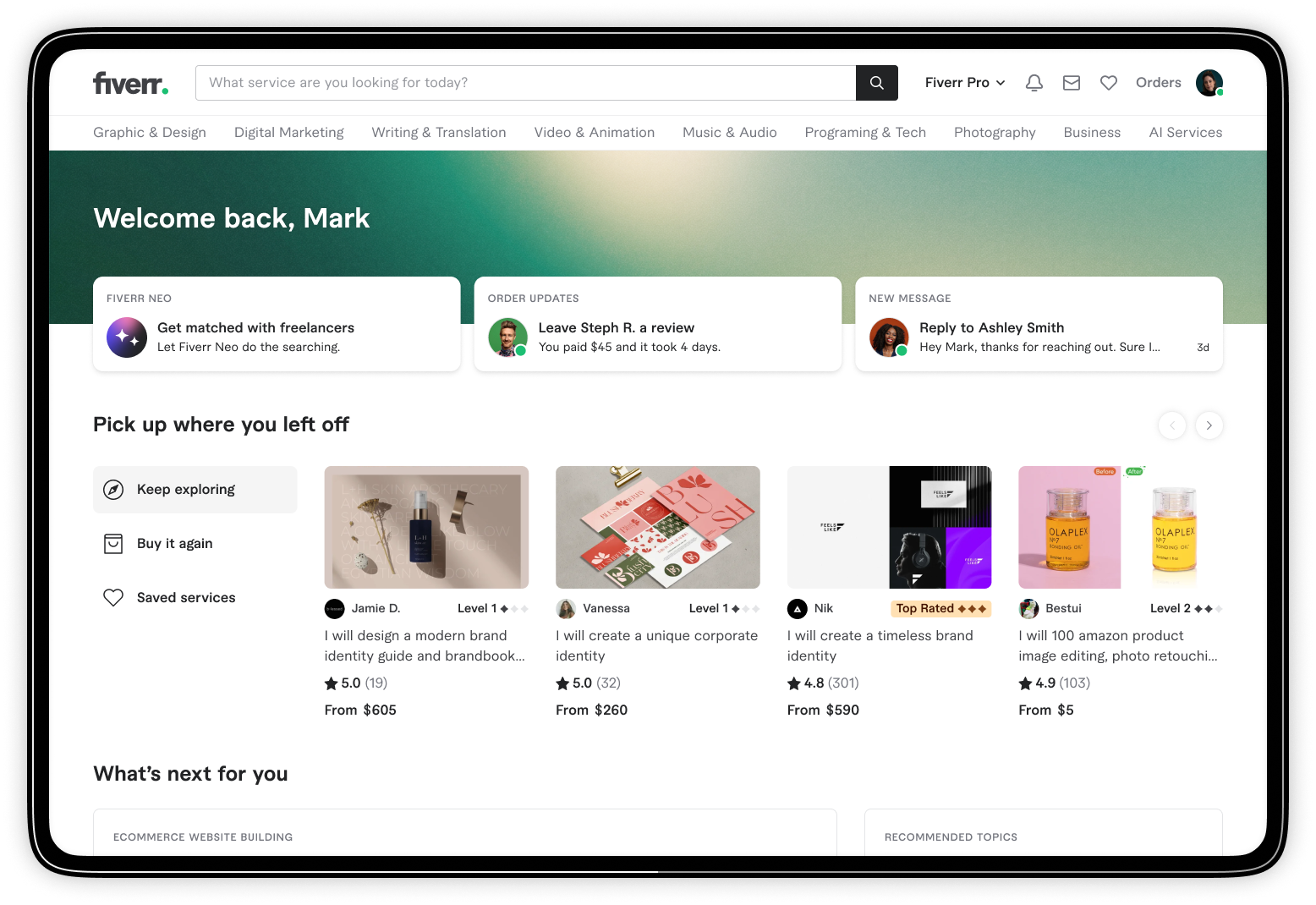
How I Redesigned Fiverr's Logged-in Homepage as a Hyper-Personalized Experience — Before AI Was on the Table

My Role
End-to-end ownership from UX strategy and information architecture through to design system and developer handoff.

Device
Desktop & Mobile Web
-
Jul–Dec 2023

Impact
+13% GOA from the page · +2.92% global retention · ~$4.78M increase in yearly revenue
The Challenges
Fiverr's logged-in homepage had one job: push buyers toward a purchase. But over time, the page had fallen far behind the platform's own design standards — visually outdated, cluttered with services and banners, and treating all buyers the same regardless of where they were in their journey.
Five core pain points emerged:
Service overload with no clear hierarchy
No true personalization beyond sales signals
A growing trust gap between the fresh logged-out experience and the stale logged-in one
Communication barriers with freelancers
No predictive guidance to help buyers move forward.
There was also an internal problem. Over the years, the homepage had become a testing ground for every product team at Fiverr — each adding their own modules, banners, and promotions in pursuit of conversion gains. The result was a page held together with patches, with no coherent system, no quality control, and no shared language between teams. Any redesign would need to solve not just the user experience, but the organizational one too.
A buyer-centric homepage that encourages the buyer to take the next step
The Vision
How We Got There
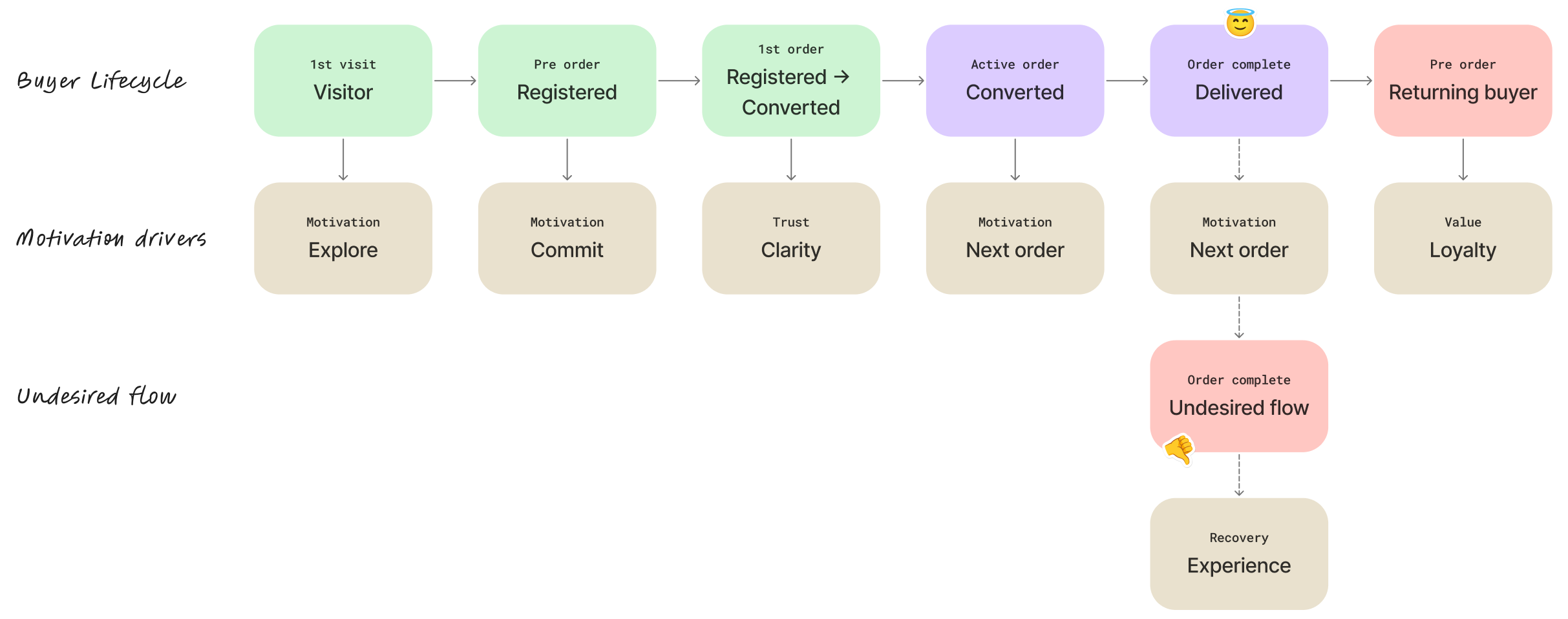
We started by mapping every buyer type against their lifecycle stage, motivation, and concerns — first-time visitors, registered but not yet converted, buyers mid-order, and repeat buyers each needed a fundamentally different experience.
From this mapping, we defined five design objectives: surface buyer motivation at each stage, improve platform orientation, bridge the trust gap between logged-out and logged-in, add education and expectation-setting, and enable smoother communication with freelancers.
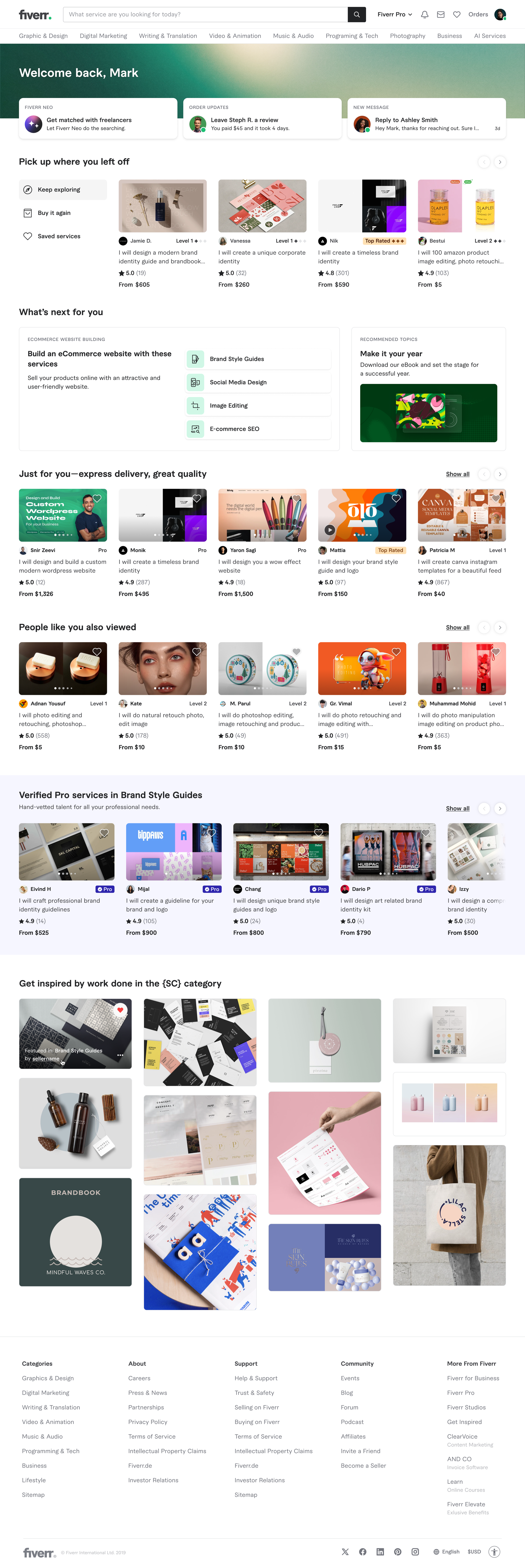
The result was a modular content system built around three core pillars — a JTBD component surfacing the buyer's most urgent task, a Primary component with dynamic marketing or service content, and a "Pick up where you left off" carousel that adapts tabs based on browsing and purchase history.
New Building Blocks
Three modular components form the backbone of the new homepage system.
Jobs to be done
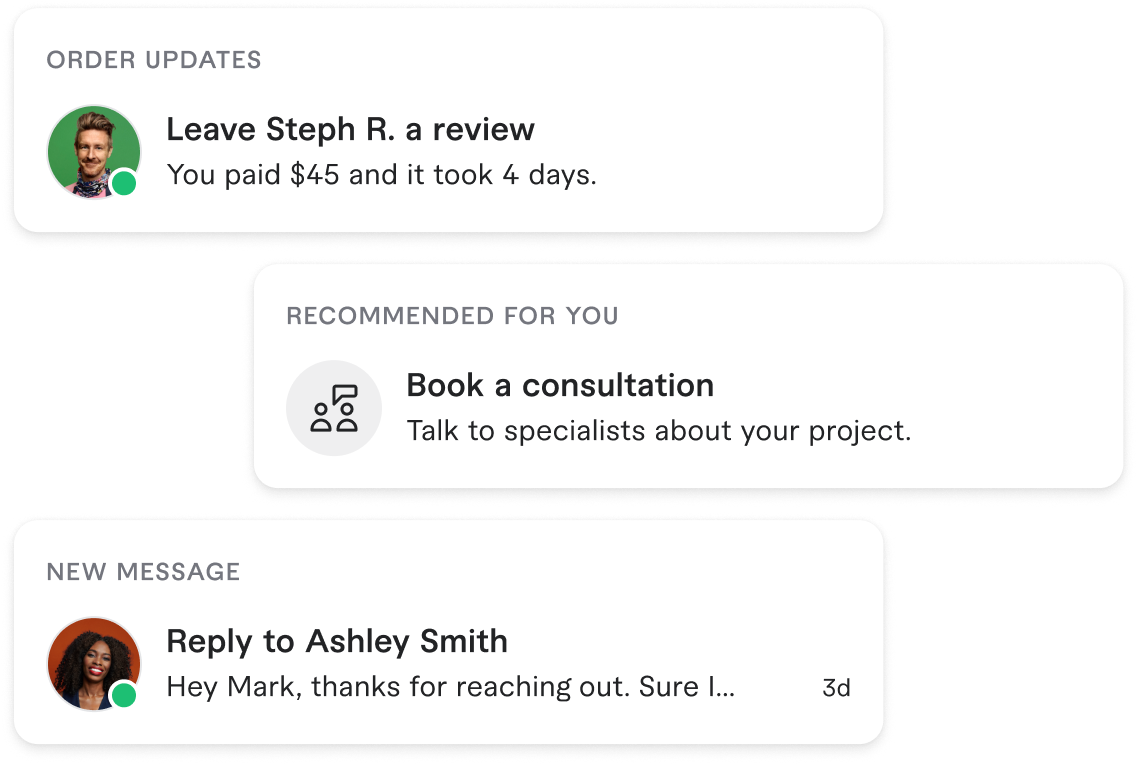
A dynamic card at the top of the page that surfaces the buyer's most relevant task — always personal, always actionable. This could be an unread message from a freelancer, a pending delivery review, a prompt to download the app after a first purchase for faster order updates, or an entry point tailored to small and mid-size business owners looking to scale their hiring.
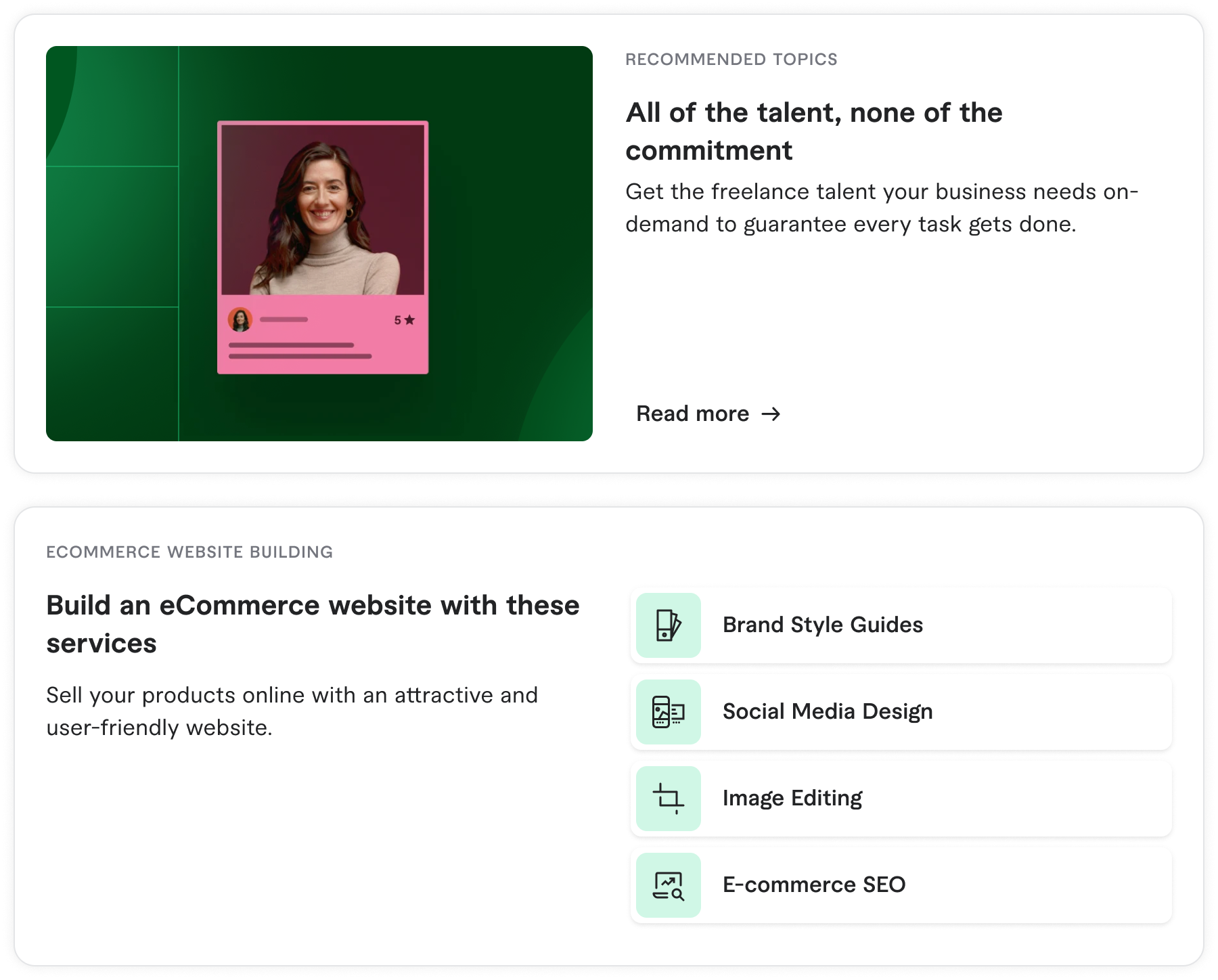
Pick Up Where You Left Off
A flexible content block that shifts between marketing content, editorial topics, and complementary service recommendations based on the buyer's current stage. It appears in three sizes — small, medium, and large — determined by predefined permutations we mapped per buyer type and lifecycle stage.
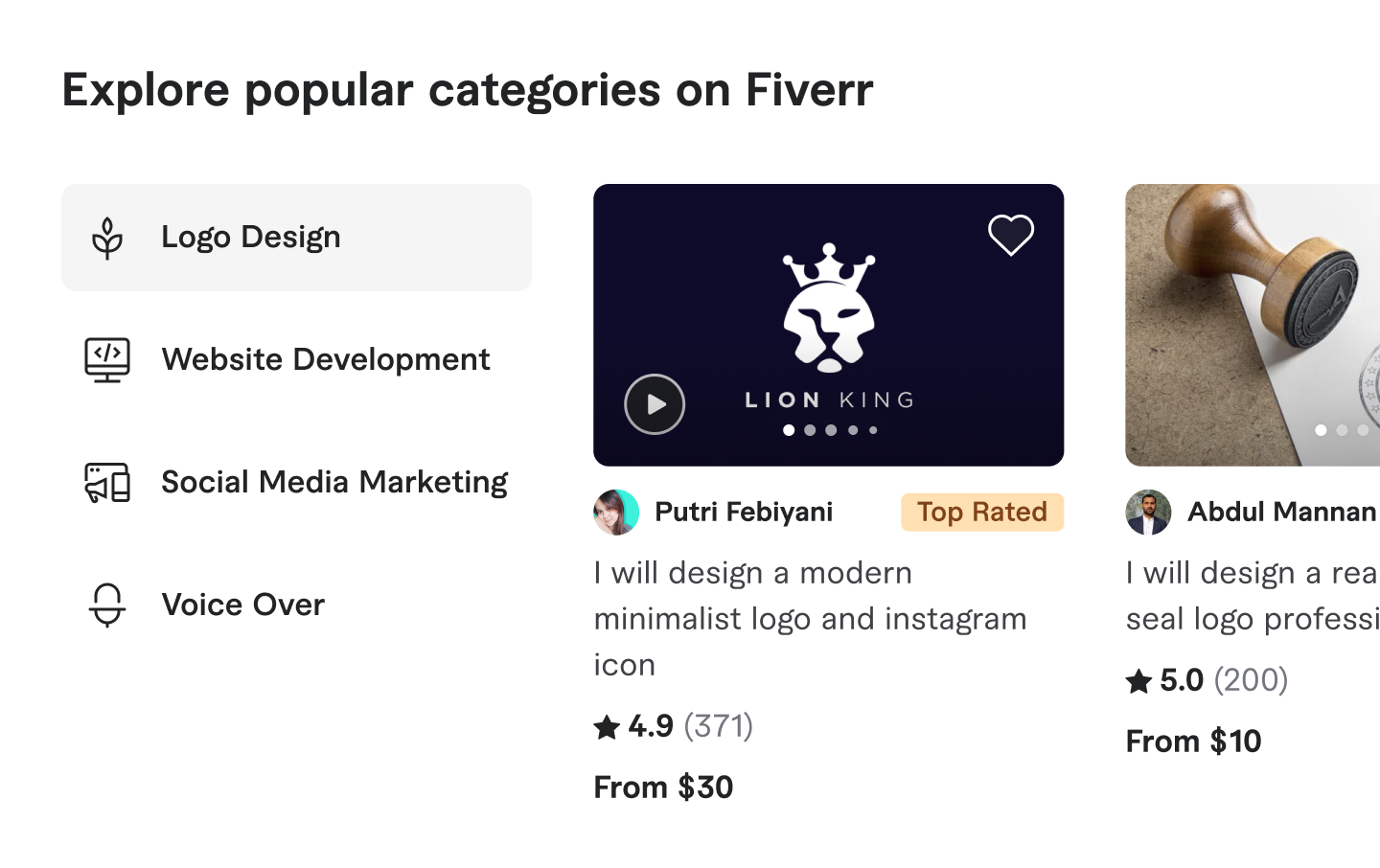
A tabbed carousel that reorganizes itself based on browsing history, past purchases, and saved services — so the content always feels one step ahead.
Primary Component
Built to Scale
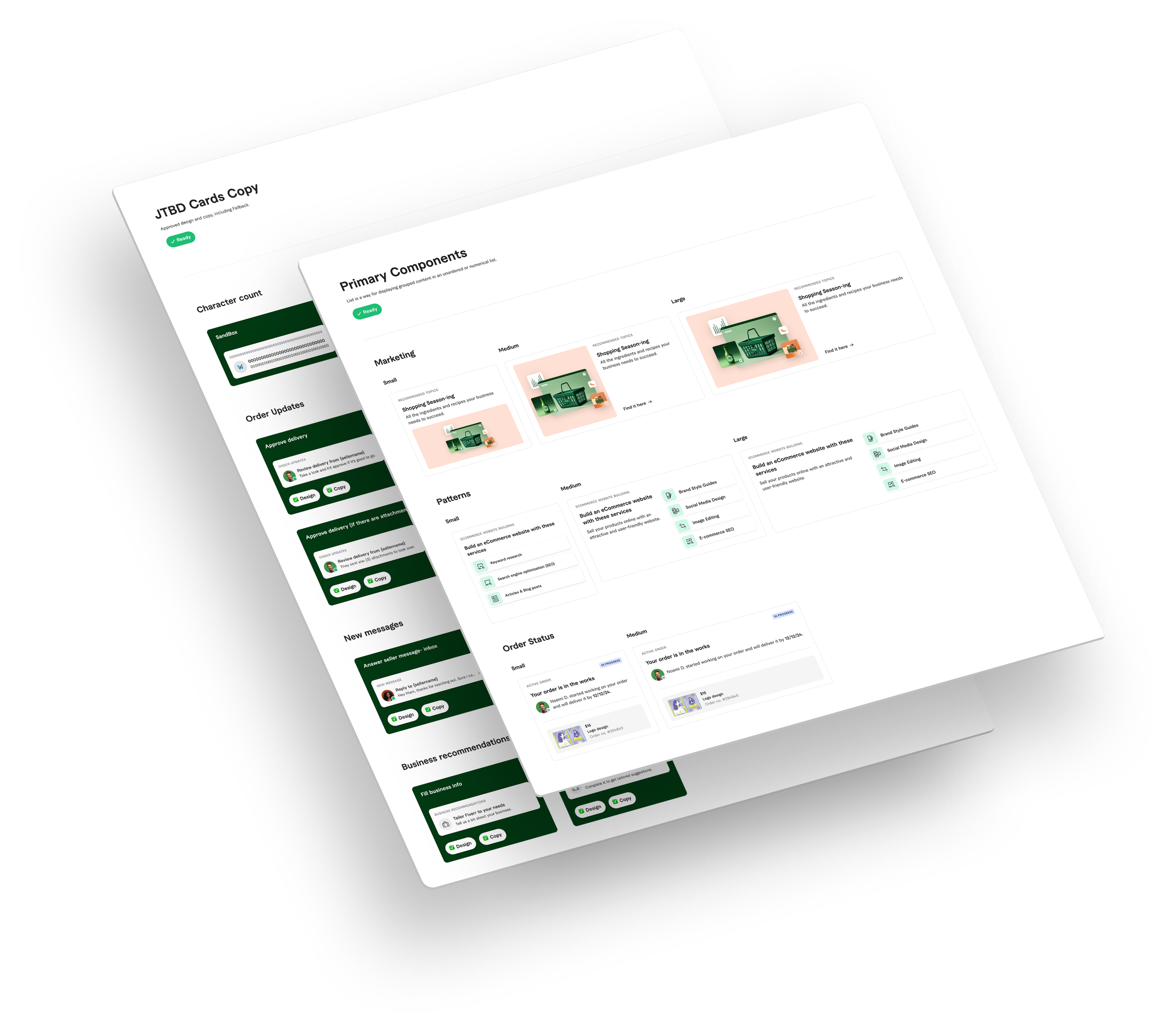
To prevent the page from reverting to its old, cluttered state, we built a comprehensive documentation framework alongside the design. Every component had defined sizes, copy guidelines, and gating criteria — so any team wanting to add content to the homepage had a clear process to follow.
+13%
GOA from the page
+2.92%
Retention rate
+7%
Increase in orders
(~37.9K more yearly)
~$4.78
Increase in GOA yearly
Results measured via A/B test, January 2024 launch. Global and local page engagement metrics.
What Would I Do Differently Today?
Looking back at this project through the lens of where AI is now, the most significant shift would be in how we approach personalization itself.
In 2023, we built a rule-based system — predefined permutations mapped per buyer type and lifecycle stage. It worked well, but it required significant upfront mapping and didn't adapt in real time. Today, I'd design the homepage around an AI-driven intent layer: one that reads behavioral signals continuously and surfaces content dynamically, without needing a human to define every permutation in advance.
I'd also explore using LLMs to close the communication gap between buyers and freelancers — not just surfacing messages faster, but helping buyers articulate what they need when they don't yet have the words for it. That's a problem the original design identified but couldn't solve structurally.
The architecture we built was designed to support this evolution. The JTBD component, the modular content system, the documentation framework — all of it was built to be replaced by something smarter. That was intentional.