The AI Assistant that turns conversations into orders
Leading the buyer-facing UX of Fiverr's first AI assistant experience, as part of the Fiverr Go initiative

My Role
Product design Team Lead.
Strategy, team management, and hands-on user experience

Device
Web & Mobile (iOS/Android)
-
Feb 2025

Impact
15% more clients converted · 8% higher value per order
How Fiverr Go Came to Be
As AI tools began enabling anyone to create professional-quality work in seconds, Fiverr faced a critical question: how do you stay relevant when the value of human freelancers is being challenged? Fiverr Go was the answer — a suite of AI tools built on top of the existing platform, designed to empower sellers rather than replace them. The goal was to give freelancers a framework that rewards their craft, protects their rights, and helps them grow in a world where AI is the new baseline.
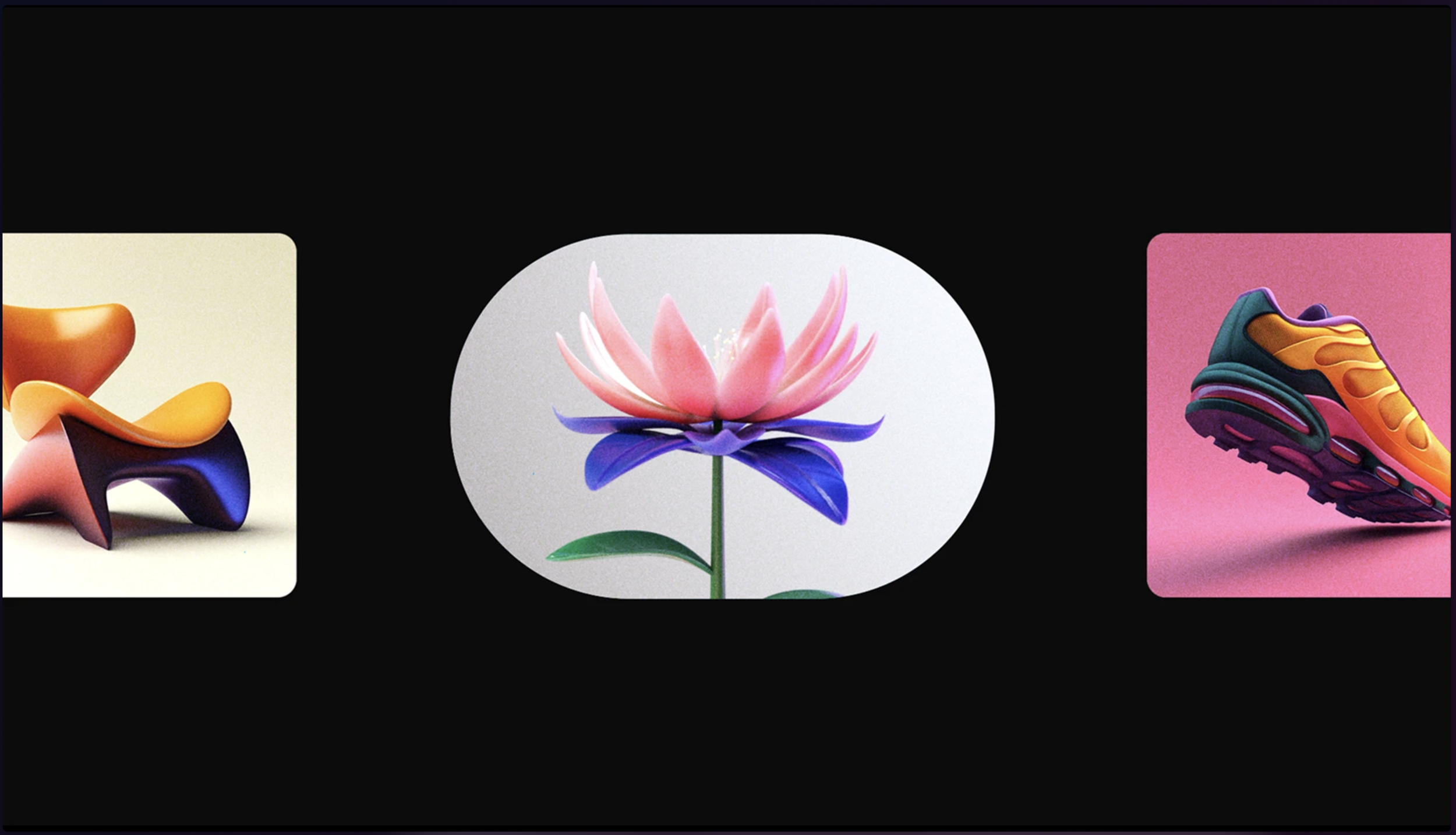
Given the scale and experimental nature of the project, it required its own visual identity — developed by an external studio alongside a dedicated design system, separate from Fiverr's existing one.
My Role
As Design Lead, I was responsible for the full buyer-facing experience of Fiverr Go's Personal Assistant, from early concept through launch.
Strategically, I was part of the core team defining the product vision: participating in design sprints, shaping the experience framework alongside product managers, marketing, and AI model teams, and driving alignment across a large cross-functional group working in parallel.
I led the design team responsible for every moment a buyer interacts with the AI: entry points, conversation states, embedded widgets, handover flows, and mobile adaptation for iOS and Android. I owned the team's process, timelines, and collaboration with engineering.
Hands-on, I stayed close to the work throughout reviewing and shaping designs, stepping in on complex flows and edge cases, and contributing directly wherever the team needed to move fast.
The Challenges
Fiverr Go introduced a brand new design system — developed by an external studio in parallel to our work. The challenge wasn't just adopting it, but bridging it with Fiverr's existing platform and embedding it as a new layer on top of a mature product.
Every component passed through our hands. The system we received was visually polished but didn't account for variable content, real-world data structures, or responsiveness. We rebuilt each widget from scratch — staying true to the visual language while making it work for UGC, dynamic data, and cross-device experience.
On top of that, we were designing a product type that didn't exist in Fiverr before: an AI-driven conversational experience with dozens of states, edge cases, and real-time generation indicators — all within an inbox system that predates modern design standards.

The Solution

We designed the full buyer-facing conversation experience — from the moment a buyer opens a chat, through every state of the AI's response, to the point an order is placed or the conversation is handed off to the human seller.
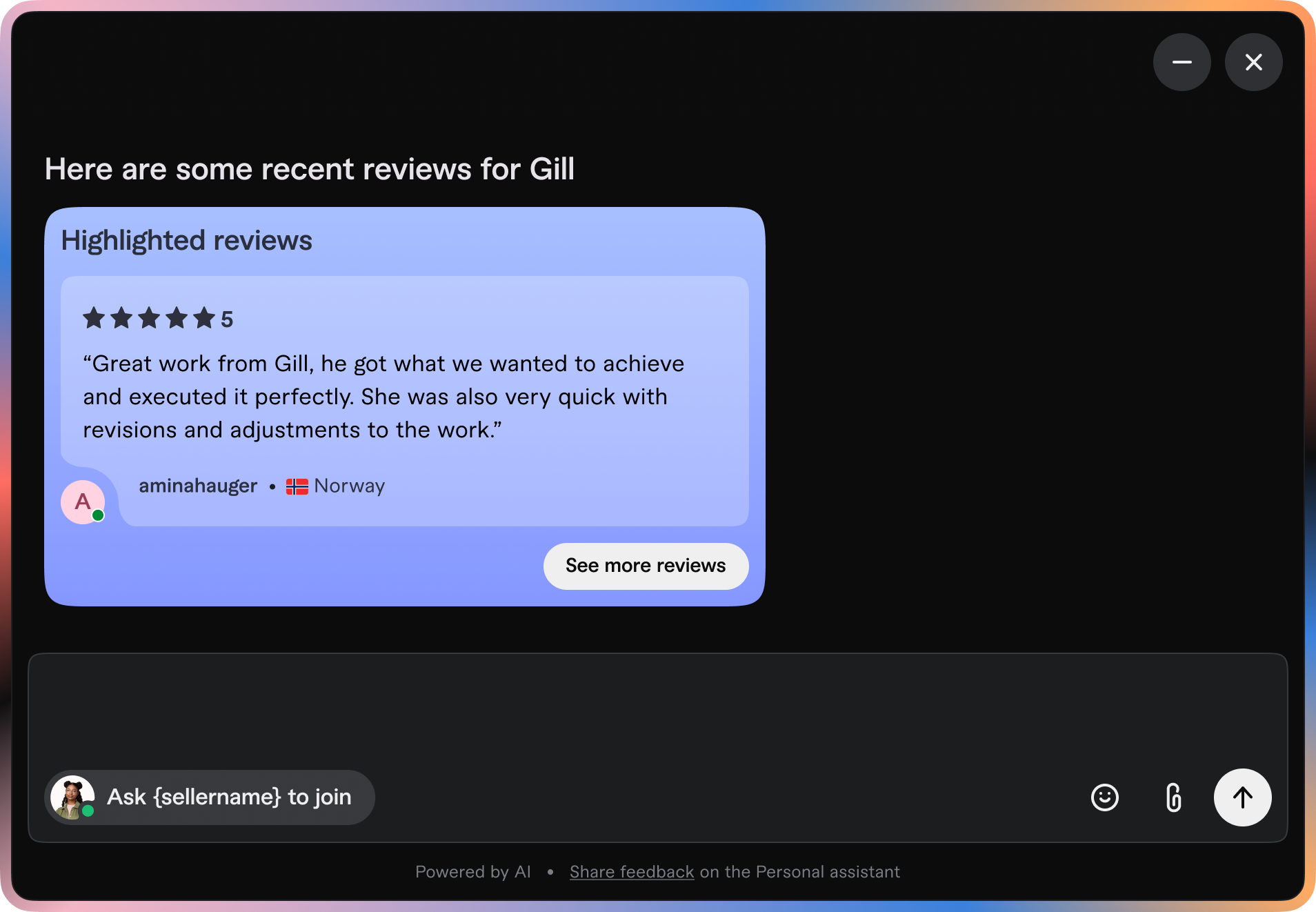
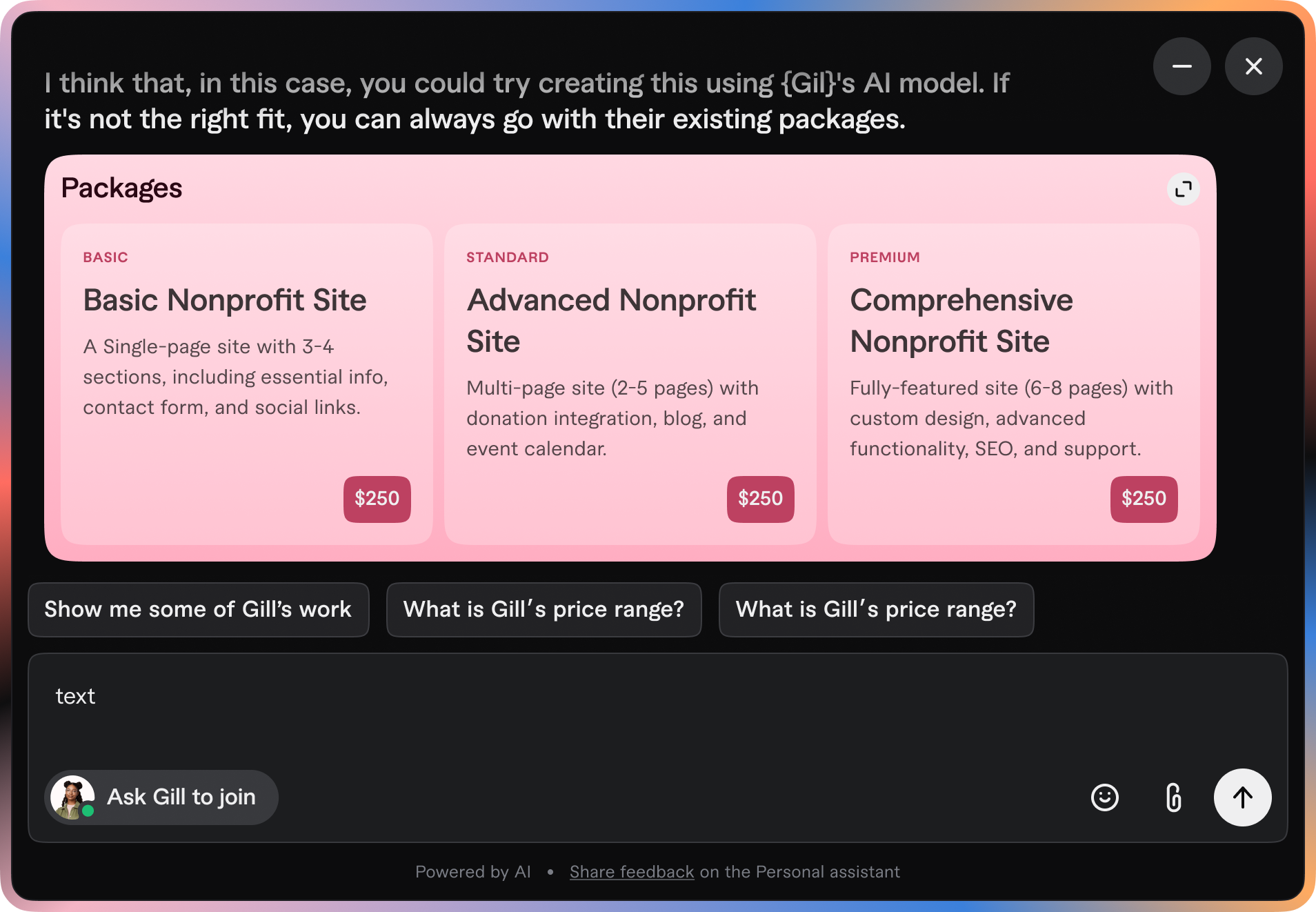
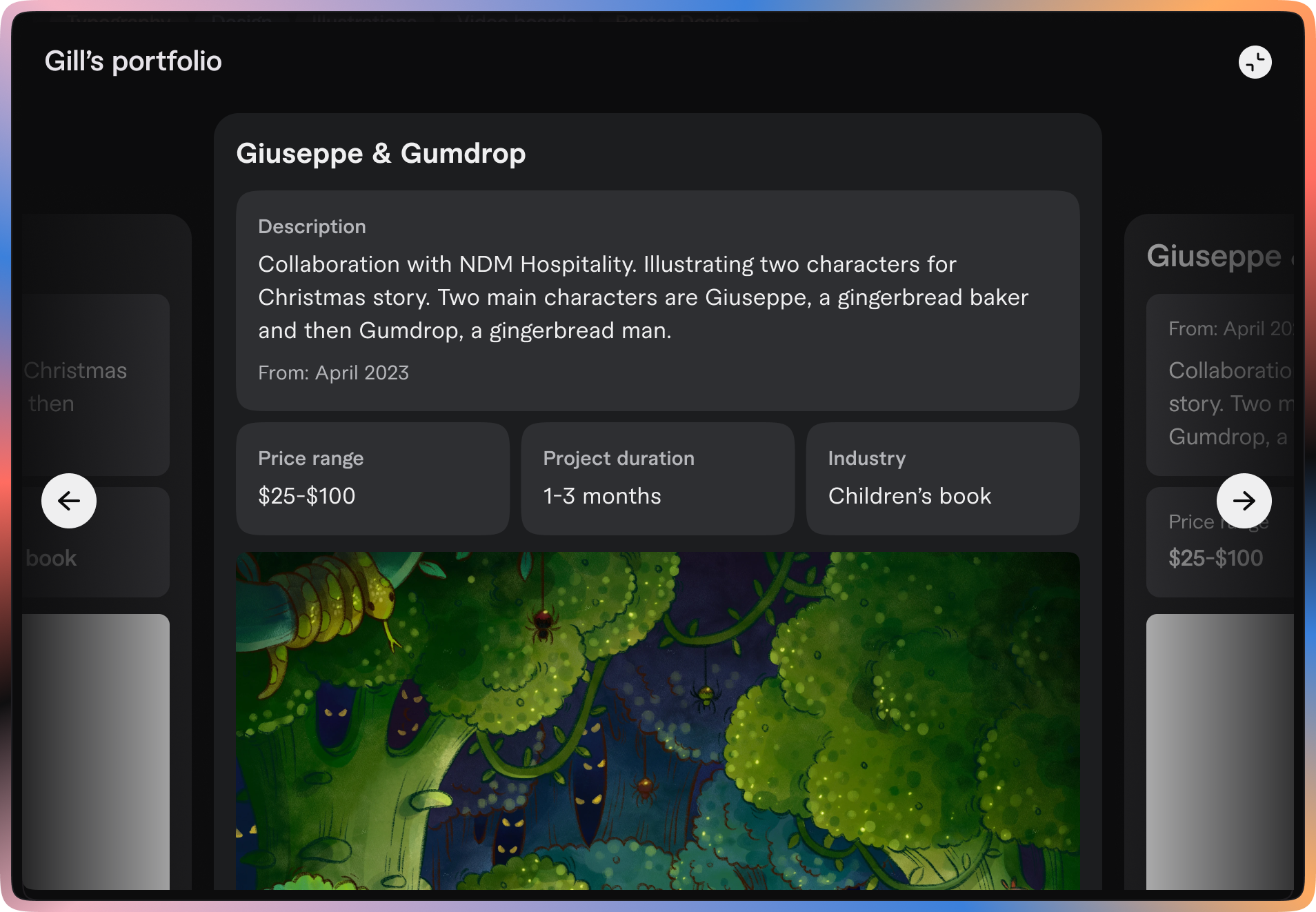
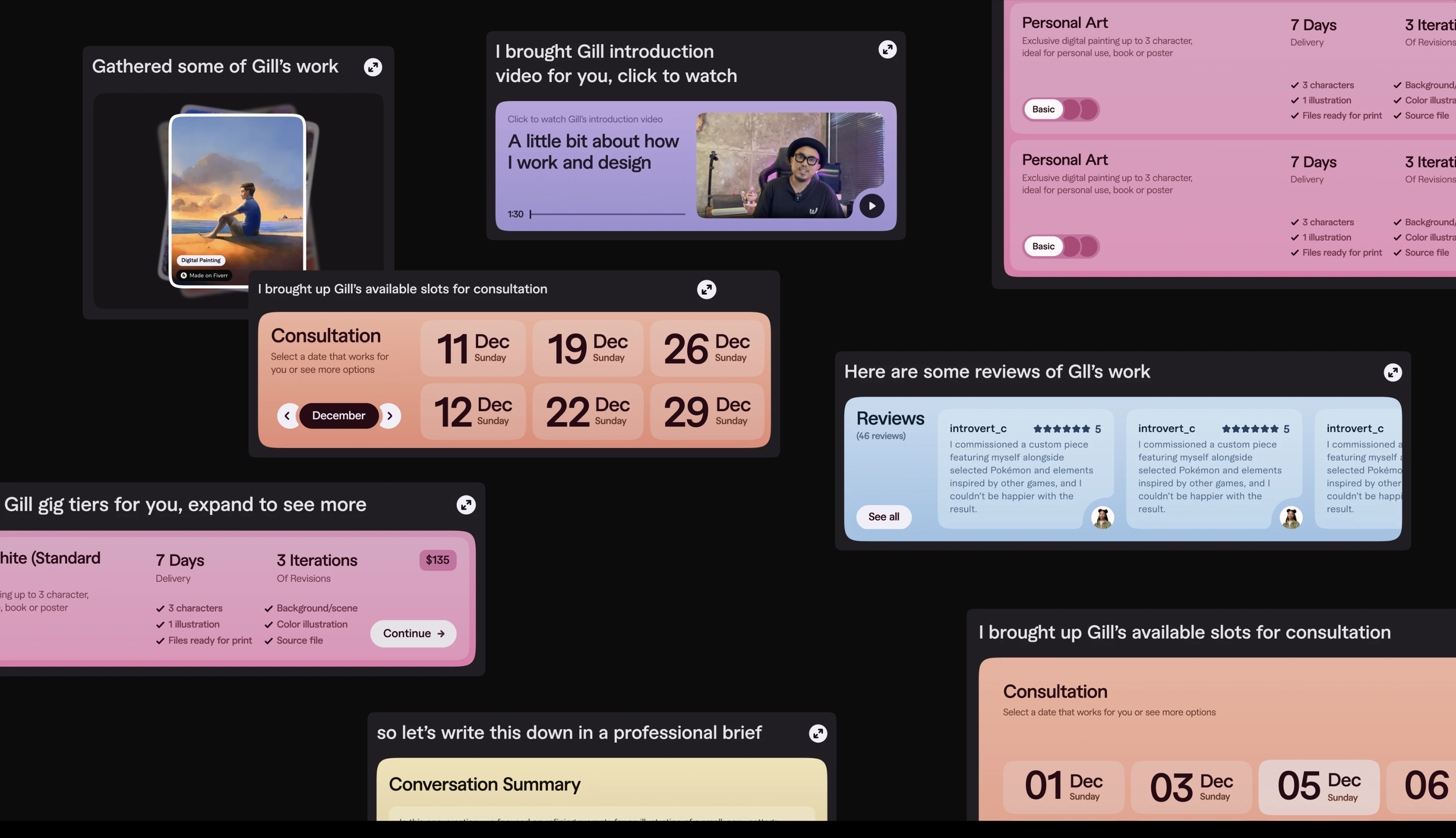
At the heart of the experience were embedded widgets: interactive components inside the chat that surface the seller's portfolio, pricing packages, or a meeting scheduling option — without leaving the conversation. We rebuilt each widget from scratch to support variable content, dynamic data, and a consistent visual language across screen sizes.
Every detail was considered: generation indicators, conversation states, edge cases, and the transition between AI and human — all designed to feel seamless to the buyer.
Embedded Widgets
Each widget surfaces seller information inside the chat — reviews, pricing, portfolio, and scheduling — without breaking the conversation flow. Every widget was rebuilt from scratch to handle variable content and responsive layouts.
When the AI reaches its limit — or the buyer asks to speak with a person — the conversation transitions seamlessly to the human seller, with a full summary of everything discussed.
A Powerful Conversion Machine
15%
more clients converted
8%
higher value per order
Reflections
This was the most intense project I've worked on — and also the one that pushed me to grow the most as a leader.
Keeping a team motivated in chaos requires constant clarity. When everything around you is changing, people need to understand why, not just what. Making sure the team always had that — even when I didn't have all the answers myself — became one of my most important responsibilities.
Moving fluidly between scales was another constant challenge: from strategic discussions about product vision to pixel-level decisions about a widget state, sometimes within the same hour. Exhausting, but it also gave me a fuller picture of the product than I would have had otherwise — and made me a better bridge between teams.
The biggest takeaway: in a fast-moving, ambiguous environment, the most valuable thing a design lead can do is create clarity for others. Not just executing, but constantly asking — does everyone have what they need to move forward?